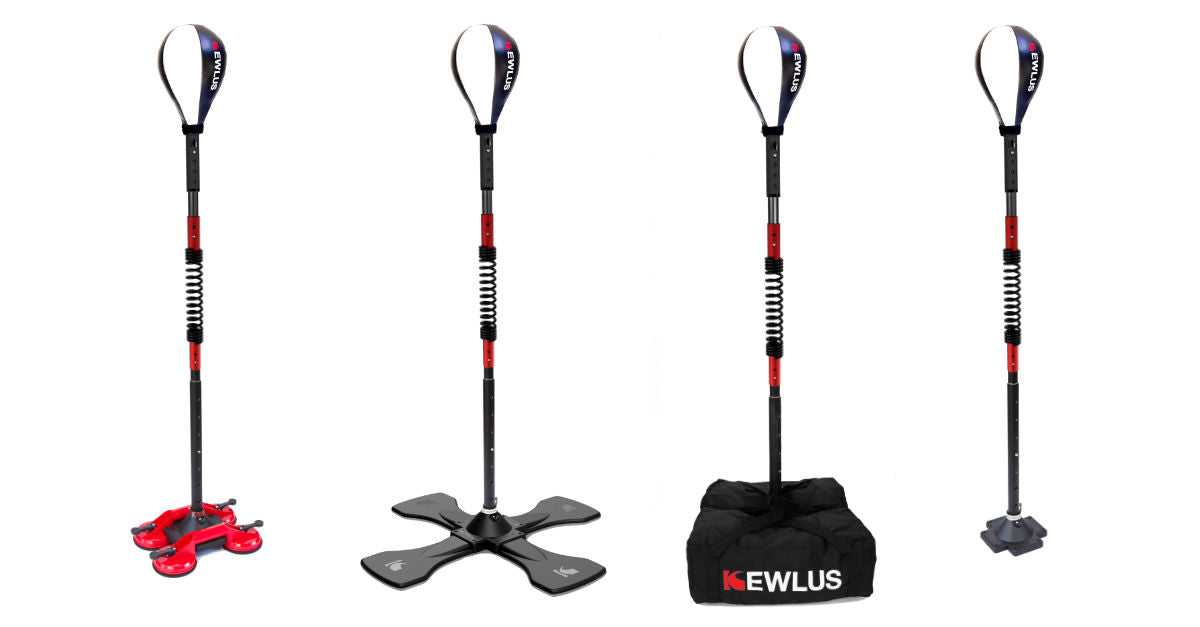
See the current IBF World Champion in action for inspiration as you build fitness, rhythm and technique at your own pace.
Expand your punching skills with three advanced lessons. First, learn full-cadence hooks to develop fluid body rotation while keeping your shoulders relaxed. Then advance to half-cadence hooks at full power. You end up with a highly varied and all-embracing 10-round structure for your daily sessions.
Explainer Video
Loading...
Description
Learn to throw light hooks at full cadence, using body rotation while keeping your shoulders relaxed.
Instructions
Complete eight 3-minute rounds, using rounds 3 and 6 for the full-cadence hooks drill. Keep your hooks light, focusing on relaxed shoulders and using body rotation to drive each punch.
LESSON DURATION
Total Rounds:8
Round Time:3 minutes
Total Work:24 minutes
Workout unavailable.
Explainer Video
Loading...
Description
Learn to increase the power of your hooks by throwing them at half cadence with greater body rotation.
Instructions
Complete eight 3-minute rounds. Keep round 3 for light hooks at full cadence. In round 6, switch to hooks at half cadence, increasing to full power through body rotation while keeping your shoulders relaxed.
LESSON DURATION
Total Rounds:8
Round Time:3 minutes
Total Work:24 minutes
Workout unavailable.
Explainer Video
Loading...
Description
Your punch tally goal and the 10-round session now give your training a purpose and a structure.
Instructions
You are now ready for lifelong fitness with a cobra bag.
LESSON DURATION
Total Rounds:10
Round Time:3 minutes
Total Work:30 minutes
Workout unavailable.
Build the technical foundation required for efficient boxing on a cobra bag, focusing on stance, rhythm, breathing, rotation, and basic striking combinations. These fundamentals develop control, coordination, and relaxed movement, creating the base needed for speed, endurance, and more advanced combinations in later modules.
Explainer Video
Loading...
Description
Gentle uppercuts at full cadence in the square stance are perfect warm-up and cool-down rounds.
Instructions
1st round: gentle, full-cadence uppercuts in a square stance to warm up your core and legs
2nd round: gentle, full-cadence straight punching in a low square stance to warm up your hips
3rd round: power punching in a fighter stance (natural)
4th round: power punching in a fighter stance (switch)
5th round: cool down with full-cadence straight punching in a low square stance
6th round: empty the tank with full-cadence uppercuts in a square stance
LESSON DURATION
Total Rounds:6
Round Time:1 minutes
Total Work:6 minutes
Workout unavailable.
Explainer Video
Loading...
Description
Once you have mastered the rear uppercuts with controlled precision, you should now be able to include a lead uppercut as well for a jab-cross-uppercut-uppercut combo. It's common for a misaligned uppercut to throw the target from it's linear trajectory. Use the jab-cross-jab-cross sequence to regain control.
Instructions
1st round: gentle, full-cadence uppercuts in a square stance to warm up your core and legs
2nd round: gentle, full-cadence straight punching in a low square stance to warm up your hips
3rd round: power punching in a fighter stance (natural), adding lead and rear uppercuts from time to time
4th round: power punching in a fighter stance (switch), adding lead and rear uppercuts from time to time
5th round: cool down with full-cadence straight punching in a low square stance
6th round: empty the tank with full-cadence uppercuts in a square stance
LESSON DURATION
Total Rounds:6
Round Time:1 minutes
Total Work:6 minutes
Workout unavailable.
Explainer Video
Loading...
Description
Once you're able to maintain half-cadence (striking on every second return), you can progress to power punching at half-cadence in the fighter stance.
Instructions
1st round: square stance, light straight punching at full cadence to warm up
2nd round: fighter stance (natural), full rotation and extension for greater power
3rd round: fighter stance (switch stance)
4th round: square stance, light straight punching at full cadence to cool down
LESSON DURATION
Total Rounds:4
Round Time:1 minutes
Total Work:4 minutes
Workout unavailable.
Explainer Video
Loading...
Description
Once you're able to maintain good control with your full-cadence uppercuts, it's time to add them to your power sequence.
Instructions
1st round: gentle, full-cadence uppercuts in a square stance to warm up your core and legs
2nd round: gentle, full-cadence straight punching in a low square stance to warm up your hips
3rd round: power punching in a fighter stance (natural), switching the odd cross for a full power uppercut
4th round: power punching in a fighter stance (switch), switching the odd cross for a full power uppercut
5th round: cool down with full-cadence straight punching in a low square stance
6th round: empty the tank with full-cadence uppercuts in a square stance
LESSON DURATION
Total Rounds:6
Round Time:1 minutes
Total Work:6 minutes
Workout unavailable.
Explainer Video
Loading...
Description
Training with the cobra bag is not just about punching. It's about using the whole body to get into the flow of the rhythm of the bag. Your legs play the biggest role.
Instructions
Start with gentle, rhythmic taps without gloves to get the feel for the cadence of the bag. Learn to tap the target at full cadence and at half cadence in a square stance. Once it becomes second nature, put on some gloves, position the Coach app just below the spring and start your first tracked session.
LESSON DURATION
Total Rounds:4
Round Time:1 minutes
Total Work:4 minutes
Workout unavailable.
Develop sustained punching power through flowing, whole-body movement.
Explainer Video
Coming Soon
Description
Introduction to Power Flow and the uppercut warm-up.
Instructions
Begin with gentle uppercuts at full cadence in a square stance. Keep your shoulders relaxed and use your legs to establish smooth, whole-body flow.
LESSON DURATION
Total Rounds:10
Round Time:2 minutes
Total Work:20 minutes
Workout unavailable.
Explainer Video
Coming Soon
Description
Finish with gentle uppercuts.
Instructions
Finish with gentle uppercuts at full cadence in a square stance. Ease the effort and maintain smooth, whole-body movement.
LESSON DURATION
Total Rounds:10
Round Time:2 minutes
Total Work:20 minutes
Workout unavailable.
Explainer Video
Coming Soon
Description
Warm up with straight punches.
Instructions
Continue warming up with light straight punches at full cadence in a square stance. Maintain a steady rhythm and coordinate your legs, hips and arms.
LESSON DURATION
Total Rounds:10
Round Time:2 minutes
Total Work:20 minutes
Workout unavailable.
Explainer Video
Coming Soon
Description
Warm up with light hooks.
Instructions
Throw light hooks at full cadence in a square stance. Focus on smooth body rotation and relaxed shoulders rather than power.
LESSON DURATION
Total Rounds:10
Round Time:2 minutes
Total Work:20 minutes
Workout unavailable.
Explainer Video
Coming Soon
Description
Cool down with light hooks.
Instructions
Return to a square stance and light hooks at full cadence. Ease the intensity while maintaining relaxed shoulders and smooth rotation.
LESSON DURATION
Total Rounds:10
Round Time:2 minutes
Total Work:20 minutes
Workout unavailable.
Explainer Video
Coming Soon
Description
Cool down with straight punches.
Instructions
Continue cooling down with light straight punches at full cadence in a square stance. Keep the rhythm steady and the movement relaxed.
LESSON DURATION
Total Rounds:10
Round Time:2 minutes
Total Work:20 minutes
Workout unavailable.
Explainer Video
Coming Soon
Description
Power hooks in natural and switch stances.
Instructions
Throw power hooks at half cadence, using your natural fighter stance in Round 4 and switch stance in Round 5. Build power through controlled, whole-body rotation.
LESSON DURATION
Total Rounds:10
Round Time:2 minutes
Total Work:20 minutes
Workout unavailable.
Explainer Video
Coming Soon
Description
Power straight punches in natural and switch stances.
Instructions
Throw power straight punches at half cadence, using your natural fighter stance in Round 6 and switch stance in Round 7. Coordinate your legs and rotation while keeping the movement flowing.
LESSON DURATION
Total Rounds:10
Round Time:2 minutes
Total Work:20 minutes
Workout unavailable.
Build on your foundations and get more out of every workout. Learn to punch faster, develop more power and build endurance with longer rounds, increasing the challenge as your fitness and skills improve. Integrate strength exercises between rounds by enabling Strength Training in Settings and choosing the muscle groups you want to work on.
Explainer Video
Loading...
Description
Refine your technique to reduce shoulder fatigue and sustain rhythmic punching through longer rounds.
Instructions
Watch the video, then complete six 3-minute rounds. Focus on using your legs and body rotation to drive your punches, keeping your shoulders relaxed and your elbows close to your body when in guard.
LESSON DURATION
Total Rounds:6
Round Time:3 minutes
Total Work:18 minutes
Workout unavailable.
Explainer Video
Loading...
Description
Use Coach’s power feedback to refine your technique and develop more powerful, efficient punches.
Instructions
Watch the video, then complete six 2-minute rounds. Use the punch power gauge to see how changes in your technique affect your relative punching power. Focus on using your legs and body rotation to sustain stronger punches throughout each round, while keeping your shoulders relaxed.
LESSON DURATION
Total Rounds:6
Round Time:2 minutes
Total Work:12 minutes
Workout unavailable.
Explainer Video
Loading...
Description
Learn three ways to increase punching speed and bring more intensity to your workouts.
Instructions
Watch the video to learn how mechanics, technique and cadence affect your punching speed. Then complete six 2-minute rounds, practising the methods shown and varying your speed throughout each round. Focus on maintaining rhythm and control as you pick up the pace.
LESSON DURATION
Total Rounds:6
Round Time:2 minutes
Total Work:12 minutes
Workout unavailable.
Explainer Video
Loading...
Description
Build strength alongside cardio fitness by integrating strength exercises between rounds.
Instructions
Watch the video, then enable your chosen muscle groups under Strength Training in Settings. Complete six 3-minute rounds, using the breaks for strength exercises targeting the muscle group displayed by Coach. The same group applies throughout the day, with Coach advancing to the next selected group on your next training day.
Target Ball: The Prime Target is made from genuine leather, designed for exceptional durability, feel, and rebound performance. Its shape is engineered specifically to match the KEWLUS Target Adapter, creating a uniquely locked-in connection that gives KEWLUS targets their signature crisp rebound feel instead of the loose, floppy response common in ordinary cobra bags. Built for real boxing gym use, KEWLUS leather targets develop the worn character of old-school leather boxing gloves while remaining exceptionally tough even after years of punishment. The modular system also allows targets to be swapped in seconds, adapting to specific training requirements.
Spring: The KS3 Striker Spring delivers the fastest and crispest rebound in the KEWLUS lineup, creating a sharper and more responsive training experience for high-intensity reflex work. Originally developed for faster, more demanding setups, the Striker quickly became a favourite among coaches and busy boxing gyms seeking a more explosive rebound feel. Its performance also led world champions Andrew and Jason Moloney, along with world cruiserweight champion Jai Opetaia, to request the Striker setup for the O₃, ultimately leading to the Striker becoming the standard spring in the O₃ Kit.
Base & Mast: The OctaBase is not just a base, but a fusion of engineering and art. Built from ultra-strong multi-ply wood panels in KEWLUS’s signature octagonal design, it delivers the most rigid platform of any cobra bag system. Combined with the Stainless Steel Mast, the OctaBase creates an exceptionally rigid platform designed for the ultimate cobra bag performance, durability and sustainability.
Assembly Instructions
The instructions below will help you with the correct assembly of the O₃ Cobra Bag Kit for optimum performance.
Step 1: Attach the Base Connector to the OctaBase
The first step is to attach the Base Connector to the OctaBase. You will find a bag of 8 long stainless steel screws. You have two options:
Upright with the arches of the OctaBase facing down - this will give you roughly an extra 5 inches of height. In most cases this is the ideal way to set up your base; or
Upside down with the arches of the OctaBase facing up - this will reduce the height, but the cavity will cup the sandbags a little better. This is better if you want a shorter cobra bag.
I recommend setting it up with the OctaBase in the upright position and use the height adjustment to lower the cobra bag to your needs. If your lowest setting is still not low enough, then you can try reconnecting with the OctaBase in the upside down position.
Placement on the floor: the base will work well on carpet, but if you're going to place it on a hard floor, consider using a very thin rubber mat. I've included a KEWLUS towel as a free gift - you could use that initially until you can find a suitable thin rubber mat.
Step 2: Insert the Mast & Tighten The Steel Clamp
Place the OctaBase on the floor and insert the Mast into the Base Connector while pressing both of the push button. Push it all the way in and twist until the buttons pop out through the holes in the Connector.
Once the buttons pop out through the holes in the Connector and the Mast is firmly in place, place the steel clamp over the collar and tighten it. Make sure to tighten it as much as you can, but only by hand. Check that the Mast is nice and rigid. From time to time check the clamp around the collar to make sure it is tight. The rigidity of the Mast will have an impact on the performance of your cobra bag.
Step 3: Insert the Click Bar into the Mast
Insert one end of the Click Bar into the top of the Mast while pressing on the two buttons on the Click Bar. Slide it down until the buttons pop out through a pair of adjacent holes in the Mast. By selecting holes at different heights gives you height adjustment.
Step 4: Mount the KS3 Spring onto the Click Bar
Press in the two buttons at the top of the Click Bar and mount the KS3 Spring onto it. Slide the Spring onto Bar until the buttons pop out through a pair of adjacent holes in the red Spring connector.
There are two sets of holes, allowing you a further fine adjustment of height.
Step 5: Insert the Click Bar or Red Bar into the Top of the KS3 Spring
The KS3 Kits come with two Click Bars, the second one for the top section of the cobra bag. For increased speed you can use the Red Bar, which is about 3 inches shorter and slightly lighter.
Swapping from using the Click Bar in the top section to the Red Bar can offer you greater variety in your reflex training.
Step 6: Assemble the Ball & Ball Adapter
Open the Velcro strap at the opening of the ball and unzip the opening all the way, revealing the bladder and the protective tongue. The tongue is there to reinforce the zip. The tongue is designed to lay flat between the diaphragm of the adapter and the zip, so pull the tongue out as you insert the adapter. Make sure that the bladder is sitting inside the diaphragm of the adapter and that the tongue is on the outside, just under the zip.
Note, that it is quite a tight fit, so you will need to push in the outer edge of the Adapter diaphragm with your thumb, while slowly working your way around until the whole diaphragm is in.
Once it's all in, adjust it so the tongue is on the outside of the diaphragm and then pull the zip as far as it will go. Note, in some targets like the Prime Target the zipper might not go all the way down - and to prevent the clasp from sliding up I recommend taping the bottom with electrical tape.
Using a ball pump (not provided) with a wet needle, inflate the ball to about half way and feel around by squeezing the ball to make sure that the bladder is where it should be in the center and not caught on the edge of the diaphragm. Do not twist the adapter as it may twist the bladder inside. Once you're satisfied that nothing is caught or twisted, inflate the ball fully until it is nice and firm. It should be firm, but not rock hard - it's important not to over-inflate it.
You can now mount the adapter with the ball on it onto the top section of your cobra bag. The Adapter has a number of hole pairs in the stem for adjusting the reach of your bag. There are also two hole pairs at the top end of the KS3 Spring just like at the bottom for fine adjustment of the reach length.
Step 7: Fill your Sandbags to Weigh Down Your Cobra Bag
The cobra bag will perform best if the base is properly weighed down. I have designed each sandbag to weigh roughly 45 pounds (20kg) when filled with sand. I strongly recommend lining the inside of each sandbag with a large, heavy duty bin liner bag to prevent the sand from seeping through the stitched seams.
As you fill the sandbag with sand, push the sand out to the sides and lift the bag occasionally to allow the sand to settle to the far end of the sandbag.
To mount the sandbags, disconnect the top part of the cobra bag so that just the Mast is left plugged into the Base Connector.
Important: When mounting the first Donut Sandbag, lower it carefully to avoid dislodging the metal clasp on the steel clamp of the Base Connector.
Optimum Tip: Using Olympic weight plates on top of the sandbags is another great way to increase not only weight, but also the rigidity of the Mast. For this I have designed a special Olympic Sleeve that comes with this kit and can slide onto the Mast and hold a weight plate or two firmly in place. I recommend using one 44LB weight plate on top of just one Donut Sandbag. I find that combination works well, but you can always add a second weight plate or sandbag if you need extra stability.
Make sure to check out my YouTube channel for more tips and ideas, as well as training videos and latest add-ons. I hope you enjoy the Kewlus cobra bag, and if you have any questions, you can ask Tim (bottom right) or use the Contact Page to get in touch with me.
Prime (KS3) Freestanding Kit
The Prime (KS3) Freestanding Kit combines the fast, responsive rebound of the KS3 Prime Spring with a compact freestanding base that requires no DIY construction. Its height can be adjusted for both adults and children, while the Platform Paddles can be completely disassembled when needed for travel.
Target Ball: The Prime Target is made from genuine leather, designed for exceptional durability, feel and rebound performance. Its shape is engineered specifically to match the KEWLUS Target Adapter, creating a uniquely locked-in connection that gives KEWLUS targets their signature crisp rebound feel instead of the loose, floppy response common in ordinary cobra bags. Built for real boxing gym use, KEWLUS leather targets develop the worn character of old-school leather boxing gloves while remaining exceptionally tough even after years of punishment. The modular system also allows targets to be swapped in seconds, adapting to specific training requirements.
Spring: The Prime (KS3) Spring is the third-generation KEWLUS spring, made from a proprietary formulation of metals for a fast, responsive rebound and exceptional longevity. Tested and proven in boxing gyms around the world, it provides an excellent balance of speed, reach and durability, making it an outstanding all-round spring for home training.
Base & Mast: The Platform Paddles create a compact freestanding base without the need to make a DIY platform. Made from strong composite-fibre material, they can be completely disassembled when the kit needs to be transported. Combined with the lightweight, rust-free Alloy Mast and included sandbags, they create a versatile platform for home training. The included Olympic Weight Plate Sleeve can also be used with your own Olympic plate to increase rigidity and further improve rebound performance.
Assembly Instructions
The instructions below will help you correctly assemble the Prime (KS3) Freestanding Kit for optimum performance. Before assembling the kit, watch the short video above covering three important things to check when setting up your KS3 cobra bag.
Step 1: Assemble the Platform Paddles with the Base Connector
The first step is to assemble the Platform Paddles with the Base Connector to form the freestanding platform of your cobra bag. Correct assembly of the Paddles is important for reliable performance.
You will need the following:
A set of 4 Platform Paddles, supplied with a bag containing 8 small black screws and one large chrome screw and nut;
The Base Connector, supplied with a steel clamp that fits around its collar; and
Your favourite Phillips screwdriver, which is not provided.
If the Mast is already inserted into the Base Connector, remove the steel clamp from around the collar. Press both buttons on the Mast firmly while twisting and pulling the Mast out of the Connector. To make this easier, place the Base Connector on the floor and stand over it with your feet partly over the sides to hold it down.
If the Mast feels too tight, you can insert a screwdriver through one of its top holes for extra leverage. Make sure that you continue pressing both buttons firmly while twisting.
Hold the Base Connector upside down and insert two of the Platform Paddles loosely into it. Thread the chrome nut partly onto the chrome screw and position it in the centre of the Paddles, with the screw head on the outside and the nut on the inside.
Insert the third and fourth Paddles, sliding each one underneath the screw head. Push all four Paddles fully into the cavity of the Base Connector, then tighten the chrome screw. Use your finger on the inside of the Connector to stop the nut from spinning until it finds grip.
Once the Paddles are securely in place, insert the 8 black screws through the top of the Base Connector and into the Paddles. Do not overtighten them. They should be hand-tight and sit relatively flush with the top surface.
Step 2: Insert the Mast & Tighten the Steel Clamp
Place the assembled platform on a firm, level floor. Insert the Mast into the Base Connector while pressing both push buttons. Push it all the way in and twist it until the buttons pop out through the holes in the Connector.
Tip: If the fit is very tight, insert a screwdriver through one of the top holes in the Mast and use it as leverage while twisting.
Once the buttons have popped out through the holes and the Mast is firmly in place, position the steel clamp around the collar of the Base Connector and tighten it as firmly as you can by hand. Check that the Mast feels rigid.
From time to time, check the clamp around the collar to make sure it remains tight. The rigidity of the Mast has a direct impact on the performance of your cobra bag.
Step 3: Insert the Click Bar into the Mast
Insert one end of a Click Bar into the top of the Mast while pressing both buttons on the Click Bar. Slide it down until the buttons pop out through a pair of adjacent holes in the Mast.
Selecting different pairs of holes allows you to adjust the overall height of your cobra bag.
Step 4: Mount the Prime (KS3) Spring onto the Click Bar
Press both buttons at the top of the Click Bar and mount the Prime (KS3) Spring onto it. Slide the Spring down until the buttons pop out through a pair of adjacent holes in the lower Spring connector.
There are two pairs of holes in the Spring connector, allowing you to make a further fine adjustment to the height.
Step 5: Insert the Click Bar or Red Bar into the Top of the KS3 Spring
The Prime (KS3) Freestanding Kit includes two Click Bars. The second Click Bar can be inserted into the top of the Spring to create a standard setup with greater reach.
The kit also includes a shorter and lighter Polymer Red Bar. Insert the Red Bar into the top of the Spring instead of the second Click Bar when you want a shorter top section with a faster, more intense rebound.
Swapping between the Click Bar and the Red Bar gives you greater variety in your reflex training.
Step 6: Assemble the Prime Target & Target Adapter
Open the Velcro strap at the opening of the Target Ball and unzip it all the way, revealing the bladder and the protective tongue. The tongue is there to reinforce the zip.
The tongue is designed to sit flat between the diaphragm of the Target Adapter and the zip, so pull the tongue out as you insert the Adapter. Make sure that the bladder is sitting inside the diaphragm of the Adapter and that the tongue is on the outside, immediately underneath the zip.
It is deliberately a tight fit. Push the outer edge of the Adapter diaphragm in with your thumb, slowly working your way around until the entire diaphragm is inside the Target Ball.
Once it is fully inserted, adjust the position so that the tongue sits on the outside of the diaphragm, then pull the zip down as far as it will go.
Note: With some targets, including the Prime Target, the zipper may not close all the way. To prevent the zipper clasp from sliding back up, I recommend securing the bottom with electrical tape.
Using a ball pump with a wet needle, which is not provided, inflate the Target Ball about halfway. Squeeze the ball gently and feel around it to make sure that the bladder is sitting centrally and has not become caught on the edge of the diaphragm.
Do not twist the Target Adapter, as this may twist the bladder inside the ball. Once you are satisfied that nothing is caught or twisted, inflate the ball fully until it feels firm but not rock-hard. It is important not to over-inflate it.
Mount the assembled Target Adapter onto the top bar of your cobra bag. The Adapter has several pairs of holes in its stem for adjusting the reach. There are also two pairs of holes at the upper end of the KS3 Spring for making a further fine adjustment to the reach length.
Step 7: Fill the Sandbags to Weigh Down Your Cobra Bag
Your cobra bag will perform best when the Platform Paddles are properly weighed down. Each included sandbag is designed to weigh roughly 45 pounds (20kg) when completely filled with sand.
I strongly recommend lining the inside of each sandbag with a large, heavy-duty bin liner bag to prevent sand from seeping through the stitched seams.
As you fill each bag, push the sand out towards the far corners and lift the bag occasionally to allow the sand to settle. Fill the bag all the way to the top so that it becomes slightly bulging, then tie the liner bag loosely and close the Velcro flaps.
Place one filled sandbag across two of the Platform Paddles, immediately next to the Mast. Secure the Velcro handle straps around the Mast to prevent the bag from sliding off during training. Place the second sandbag on the opposite side in the same way.
Tip: More weight will improve the performance of the cobra bag. Wet sand is ideal because it makes each sandbag approximately 20% heavier. The combined weight should be at least 90–100 pounds for solid performance. If you need additional stability, you can also add a second pair of sandbags on top of the first pair.
Optimum Tip: Using Olympic weight plates above the sandbags is an excellent way to increase not only the overall weight, but also the rigidity of the Mast. The included Olympic Weight Plate Sleeve slides onto the Mast and holds one or two of your own Olympic weight plates securely in place. Because the plates brace the Mast at a higher point, they can greatly enhance the performance of your cobra bag.
Optional Short Setup for Small Children
The Prime (KS3) Freestanding Kit can also be converted into a shorter setup for small children as young as five. Remove the Mast and the lower Click Bar located between the Mast and Spring. Keep the upper Click Bar or Red Bar, Target Adapter and Target Ball assembled above the Spring. Insert the Prime (KS3) Spring directly into the Base Connector and tighten the steel clamp around the Base Connector collar to hold the Spring securely in place.
This creates a compact version of the cobra bag at a comfortable height for younger users. When your child outgrows the highest adjustment of the short setup, add the Mast and lower Click Bar together to increase the height.
Adult Supervision: An adult should always assemble the cobra bag and supervise children during use.
Make sure to check out my YouTube channel for more tips and ideas, as well as training videos and the latest add-ons. I hope you enjoy your KEWLUS cobra bag. If you have any questions, use the Contact Page to get in touch with me.
Classic (KS2) Freestanding Kit
The Classic (KS2) Freestanding Kit combines the controlled, responsive rebound of the KS2 Spring with a compact freestanding base that requires no DIY construction. It is an excellent starting point for anyone who is new to reflex-bag training, while the modular design allows individual components to be upgraded as your training progresses. The Platform Paddles can also be completely disassembled when needed for travel.
Target Ball: The Classic Target Ball is made from lightweight synthetic material, designed to complement the controlled and responsive rebound of the KS2 Spring. Its shape is engineered specifically to match the KEWLUS Target Adapter, creating a secure connection and a reliable rebound feel. The modular system also allows targets to be swapped in seconds as your training requirements evolve.
Spring: The Classic (KS2) Spring is the second-generation KEWLUS spring, designed to provide a manageable yet responsive rebound. It is an excellent choice for developing timing, accuracy and coordination, particularly for anyone who is new to cobra-bag training. The KS2 Spring can later be upgraded to a Prime (KS3) Spring when you are ready for a faster and more demanding rebound.
Base & Mast: The Platform Paddles create a compact freestanding base without the need to make a DIY platform. Made from strong composite-fibre material, they can be completely disassembled when the kit needs to be transported. Combined with the lightweight, rust-free Alloy Mast and included sandbags, they create a versatile platform for home training. The included Olympic Weight Plate Sleeve can also be used with your own Olympic plate to increase rigidity and further improve rebound performance.
Assembly Instructions
The instructions below will help you correctly assemble the Classic (KS2) Freestanding Kit for optimum performance.
Step 1: Assemble the Platform Paddles with the Base Connector
The first step is to assemble the Platform Paddles with the Base Connector to form the freestanding platform of your cobra bag. Correct assembly of the Paddles is important for reliable performance.
You will need the following:
A set of 4 Platform Paddles, supplied with a bag containing 8 small black screws and one large chrome screw and nut;
The Base Connector, supplied with a steel clamp that fits around its collar; and
Your favourite Phillips screwdriver, which is not provided.
If the Mast is already inserted into the Base Connector, remove the steel clamp from around the collar. Press both buttons on the Mast firmly while twisting and pulling the Mast out of the Connector. To make this easier, place the Base Connector on the floor and stand over it with your feet partly over the sides to hold it down.
If the Mast feels too tight, you can insert a screwdriver through one of its top holes for extra leverage. Make sure that you continue pressing both buttons firmly while twisting.
Hold the Base Connector upside down and insert two of the Platform Paddles loosely into it. Thread the chrome nut partly onto the chrome screw and position it in the centre of the Paddles, with the screw head on the outside and the nut on the inside.
Insert the third and fourth Paddles, sliding each one underneath the screw head. Push all four Paddles fully into the cavity of the Base Connector, then tighten the chrome screw. Use your finger on the inside of the Connector to stop the nut from spinning until it finds grip.
Once the Paddles are securely in place, insert the 8 black screws through the top of the Base Connector and into the Paddles. Do not overtighten them. They should be hand-tight and sit relatively flush with the top surface.
Step 2: Insert the Mast & Tighten the Steel Clamp
Place the assembled platform on a firm, level floor. Insert the Mast into the Base Connector while pressing both push buttons. Push it all the way in and twist it until the buttons pop out through the holes in the Connector.
Tip: If the fit is very tight, insert a screwdriver through one of the top holes in the Mast and use it as leverage while twisting.
Once the buttons have popped out through the holes and the Mast is firmly in place, position the steel clamp around the collar of the Base Connector and tighten it as firmly as you can by hand. Check that the Mast feels rigid.
From time to time, check the clamp around the collar to make sure it remains tight. The rigidity of the Mast has a direct impact on the performance of your cobra bag.
Step 3: Insert the Aluminium Click Bar into the Mast
Insert one end of the Aluminium Click Bar into the top of the Mast while pressing both buttons on the Click Bar. Slide it down until the buttons pop out through a pair of adjacent holes in the Mast.
Selecting different pairs of holes allows you to adjust the overall height of your cobra bag.
Step 4: Attach the Spring End Covers & Mount the KS2 Spring
The Classic (KS2) Freestanding Kit includes a pair of black rubber Spring End Covers. Screw one cover onto each end of the KS2 Spring until the end of the spring coil touches the far end of the rubber cover. You can feel for the end of the coil with your index finger.
Slide the lower Spring End Cover onto the Aluminium Click Bar until the push buttons pop out through the holes in the cover.
The connection is deliberately quite tight. If needed, apply a small amount of olive oil to the inside rim of the rubber cover and rotate the Spring clockwise as you slide it onto the Click Bar.
Important: Always rotate the Spring clockwise when inserting or removing the bars. Clockwise rotation opens the coils, making the process easier and protecting the Spring End Covers.
Alternative Setup: The Spring End Covers give the KS2 Spring a clean appearance and allow the bars to click securely into place, but they are optional. You can also insert the Aluminium Click Bar directly into the Spring and secure it with stretchy duct tape.
The taped method allows you to fine-tune the rebound speed by adjusting how far the bars extend into the Spring. Inserting the bars further into the Spring creates a faster rebound. Make sure that you leave at least 5 active spring coils between the upper and lower bars.
Step 5: Insert the Polymer Red Bar into the Top of the KS2 Spring
Insert the Polymer Red Bar into the upper Spring End Cover until the push buttons pop out through the holes in the cover.
The Polymer Red Bar is shorter and lighter than the Aluminium Click Bar, helping the Classic (KS2) setup deliver a faster and more responsive rebound.
If you are using the alternative taped setup without a Spring End Cover, insert the Polymer Red Bar into the top of the Spring until the push buttons are touching the coil, then secure the connection firmly with stretchy duct tape.
Step 6: Assemble the Classic Target Ball & Target Adapter
Open the Velcro strap at the opening of the Target Ball and unzip it all the way, revealing the bladder and the protective tongue. The tongue is there to reinforce the zip.
The tongue is designed to sit flat between the diaphragm of the Target Adapter and the zip, so pull the tongue out as you insert the Adapter. Make sure that the bladder is sitting inside the diaphragm of the Adapter and that the tongue is on the outside, immediately underneath the zip.
It is deliberately a tight fit. Push the outer edge of the Adapter diaphragm in with your thumb, slowly working your way around until the entire diaphragm is inside the Target Ball.
Once it is fully inserted, adjust the position so that the tongue sits on the outside of the diaphragm, then pull the zip down as far as it will go.
Note: With some targets, the zipper may not close all the way. To prevent the zipper clasp from sliding back up, I recommend securing the bottom with electrical tape.
Using a ball pump with a wet needle, which is not provided, inflate the Target Ball about halfway. Squeeze the ball gently and feel around it to make sure that the bladder is sitting centrally and has not become caught on the edge of the diaphragm.
Do not twist the Target Adapter, as this may twist the bladder inside the ball. Once you are satisfied that nothing is caught or twisted, inflate the ball fully until it feels firm but not rock-hard. It is important not to over-inflate it.
Mount the assembled Target Adapter onto the Polymer Red Bar. The Adapter has several pairs of holes in its stem, allowing you to adjust the reach of the cobra bag.
Step 7: Fill the Sandbags to Weigh Down Your Cobra Bag
Your cobra bag will perform best when the Platform Paddles are properly weighed down. Each included sandbag is designed to weigh roughly 45 pounds (20kg) when completely filled with sand.
I strongly recommend lining the inside of each sandbag with a large, heavy-duty bin liner bag to prevent sand from seeping through the stitched seams.
As you fill each bag, push the sand out towards the far corners and lift the bag occasionally to allow the sand to settle. Fill the bag all the way to the top so that it becomes slightly bulging, then tie the liner bag loosely and close the Velcro flaps.
Place one filled sandbag across two of the Platform Paddles, immediately next to the Mast. Secure the Velcro handle straps around the Mast to prevent the bag from sliding off during training. Place the second sandbag on the opposite side in the same way.
Tip: More weight will improve the performance of the cobra bag. Wet sand is ideal because it makes each sandbag approximately 20% heavier. The combined weight should be at least 90–100 pounds for solid performance. If you need additional stability, you can also add a second pair of sandbags on top of the first pair.
Optimum Tip: Using Olympic weight plates above the sandbags is an excellent way to increase not only the overall weight, but also the rigidity of the Mast. The included Olympic Weight Plate Sleeve slides onto the Mast and holds one or two of your own Olympic weight plates securely in place. Because the plates brace the Mast at a higher point, they can greatly enhance the performance of your cobra bag.
Make sure to check out my YouTube channel for more tips and ideas, as well as training videos and the latest add-ons. I hope you enjoy your KEWLUS cobra bag. If you have any questions, you can use the Contact Page to get in touch with me.
KS2 DIY Cobra Bag
The KS2 DIY Cobra Bag is where the Kewlus story began - giving people the option to make their own high-performance cobra bag using low-cost, off-the-shelf parts such as standard plumbing pipes, chipboard and a pool noodle. At the heart of the setup is the purpose-designed KS2 "Classic" Spring, which turns these simple materials into an exceptionally fast and responsive training bag.
Target Ball: The target ball is made from sections cut from a single pool noodle, which you can buy from Kmart for just a few dollars. Wrapped in an outer skin of duct tape, it delivers a very satisfying punching feel and rebounds beautifully. Because it is lightweight, it moves extremely fast. You can also add a little extra weight simply by applying more duct tape. Best of all, unlike a regular cobra bag target with an inflatable bladder, it never needs to be pumped up.
Spring: The KS2 "Classic" Spring has been refined over several years to deliver the fast rebound speed that works so well with the lightweight DIY target ball. I keep the price of this spring as low as I reasonably can, so more people have the opportunity to make and own a high-performance cobra bag.
Base: The base can be made by gluing together multiple MDF or chipboard panels using heavy-duty construction adhesive. I take the design a step further by cutting off the corners and reusing them as feet. This creates a base that is similar to the OctaBase in shape, height and stability, but without the price tag.
Part 1: Make the Top Section
Items You Will Need
KS2 "Classic" Spring
One pool noodle
Standard ¾″ PVC pipe (approximately 1.05″ outer diameter) - start with approximately 24″ in length
Wide, stretchy PVC duct tape
Serrated knife
Make the Target Ball
Cut a 6″ section from the pool noodle. This becomes the centre of the target ball.
Cut a second 12″ section of pool noodle and split it lengthwise.
Wrap each of the split sections around the 6″ centre piece and tape them firmly into place.
Cut an 18″ section of pool noodle and split it lengthwise.
Use one of these split sections to wrap around the middle of the target ball, then tape it into place.
Wrap a small amount of tape around one end of the PVC pipe to form a cone shape. This will make it easier to push the pipe through the centre of the target ball.
Thread the target ball onto the PVC pipe.
Using the wide, stretchy duct tape, wrap from the bottom of the target, over the top and back down to the bottom again. Repeat this one section at a time until the entire target is covered.
Choose the Top-Section Length
Start with approximately 24″ of PVC pipe. A longer top section gives the target a greater range of movement and works well for defensive training, but it will move slightly more slowly. A shorter section increases speed but reduces the range of movement.
I do not recommend cutting the pipe shorter than approximately 20″. It is best to start longer and shorten it later if you decide that you want a faster rebound.
Attach the Top Section to the Spring
Insert the PVC pipe approximately 2″ into the KS2 "Classic" Spring, then secure it tightly using the wide, stretchy PVC duct tape.
Part 2: Make the Mast and Base Connector
Items You Will Need
One length of 1″ galvanised pipe for the main mast
One short section of standard ¾″ galvanised pipe (approximately 1.05″ / 26.7 mm outer diameter) for mounting the spring
One 1″ to ¾″ reducing coupling
One galvanised flange sized to match the 1″ main mast pipe
Wide, stretchy PVC duct tape
Thick, long screws that fit through the flange holes for attaching the flange to the base in Part 3
Choose the Mast Height
Choose the combined length of the mast pipes so that the spring sits at approximately hip level and the target ball sits around shoulder or chin level. The top of the mast will generally sit around the top of your thigh.
Remember to allow for the height of the base when choosing the length of the main mast pipe. The DIY base in Part 3 will be approximately 5″ high.
Make the Mast
Use a 1″ galvanised pipe for the main mast. This gives the cobra bag a more solid base connection than using ¾″ pipe for the full mast.
Fit the 1″ to ¾″ reducing coupling onto the top of the main mast pipe.
Fit the short section of ¾″ galvanised pipe into the reducing coupling.
Insert the ¾″ pipe into the KS2 "Classic" Spring and secure the spring tightly using the wide, stretchy PVC duct tape.
Attach the galvanised flange to the bottom of the 1″ main mast pipe.
Prepare the Base Connector
When attaching the flange to the DIY base in Part 3, use the thickest and longest screws that will fit through the flange holes. This is one of the reasons the DIY base needs to be solid and approximately 5″ thick.
Optional Adjustable Upgrade
A galvanised-pipe mast is fixed at one height. If you later want an adjustable setup for different members of the family, you can upgrade to a KEWLUS Mast, Click Bar and Base Connector.
Part 3: Make the Base
Items You Will Need
MDF or chipboard panels, each approximately 18″ × 18″
Heavy-duty construction adhesive, such as Liquid Nails
Four heavy-duty screws with Allen-key or hex-bolt heads, sized to fit the holes in the galvanised flange
Drill and drill bit for pre-drilling the screw holes
Approximately 100 lb of weight, such as sandbags or weight plates
Optional: two fixed caster wheels for moving the loaded cobra bag
Optional: long reinforcing screws if caster wheels are added
Make the Base
Cut the MDF or chipboard panels to approximately 18″ × 18″. Do not go smaller, as this will compromise stability and performance. Going much larger can make it harder to place your feet close to the base while training.
For an octagonal shape, measure 5″ from each corner along both adjoining edges and cut off the corners. This creates eight sides of approximately 7″ each.
Keep the corner pieces. They can be glued underneath the base to add height and help prevent the base from sliding on carpet.
Glue the four main panels together using heavy-duty construction adhesive. If you are using laminated boards, allow several days for the glue to set properly before using the base.
Glue the saved corner pieces underneath the base in stacks of three. Use two stacks near the front and three stacks across the back to create a raised support structure.
Attach the Flange
Position the 1″ galvanised flange in the centre of the base.
Pre-drill the holes to reduce the risk of splitting the timber.
Use the thickest screws that will fit through the flange holes. Screws with Allen-key or hex-bolt heads are strongly recommended because they can be tightened with much more torque than standard Phillips-head screws.
Tighten the flange firmly and check that there is no movement.
Re-check the flange after a few days of training. If it begins to move, use larger screws. You can also add a small amount of glue into the screw holes before tightening the screws.
Add Weight
Add approximately 100 lb of weight to the base. A pair of sandbags will work, but a particularly rigid setup can be made using a round sandbag with a weight plate on top. Make a simple paper sleeve around the mast to fill the centre gap and keep the weight stable. This also helps protect the flange from excessive forces while training.
Optional Caster-Wheel Upgrade
For easier movement, attach a pair of fixed caster wheels to the rear edge underneath the base. Do not use swivel wheels. Position the wheels so the loaded cobra bag can be tilted onto them and rolled into place without removing the weights.
Reinforce the underside with long screws if needed, so the base can safely handle the heavy load while tilted onto the wheels.
Exit the lesson?
12-Month Tally: 0
Average Power: N/A
Save your calendar backup
Save a CSV of your existing calendar before upgrading. Your records stay unchanged until you continue.
The CSV contains calendar history only. Lessons and settings are separate. Complete this step before starting a workout.
Settings
Set Your Mic Sensitivity
9
Strength Training During Breaks
Groups rotate in the order you select them, once per training day.
Add To Home Screen
FREE TRAINING
Scorecard
0
Punches
0Rounds
0Avg Power
coach.kewlus.com
Choosing a selection results in a full page refresh.